
Insights, Tips, and Tales

Why You Need to Aerate the Lawn!

White mosquito silhouette with a dashed curved flight path on a green background

Why You Need to Aerate the Lawn!

We have all seen the goofy looking shoe accessory you’re supposed to wear on your walk to pick up the Sunday newspaper; unfortunately, that method just won’t cut it for the Southeast’s tough soil.

What Does Aerating Your Lawn Do?

Just as potted plants need to be repotted, allowing their roots to grow and expand, your lawn’s roots need to grow and expand. Heavily traveled on soil or soil with high clay content can make it difficult for your lawn’s roots to generate new growth. The evident problem is your lawn cannot be repotted; therefore, we aerate. The process is designed to penetrate the lawn’s turf and root system. There are multiple methods to aerate a lawn, but the most effective method is “core aeration.”
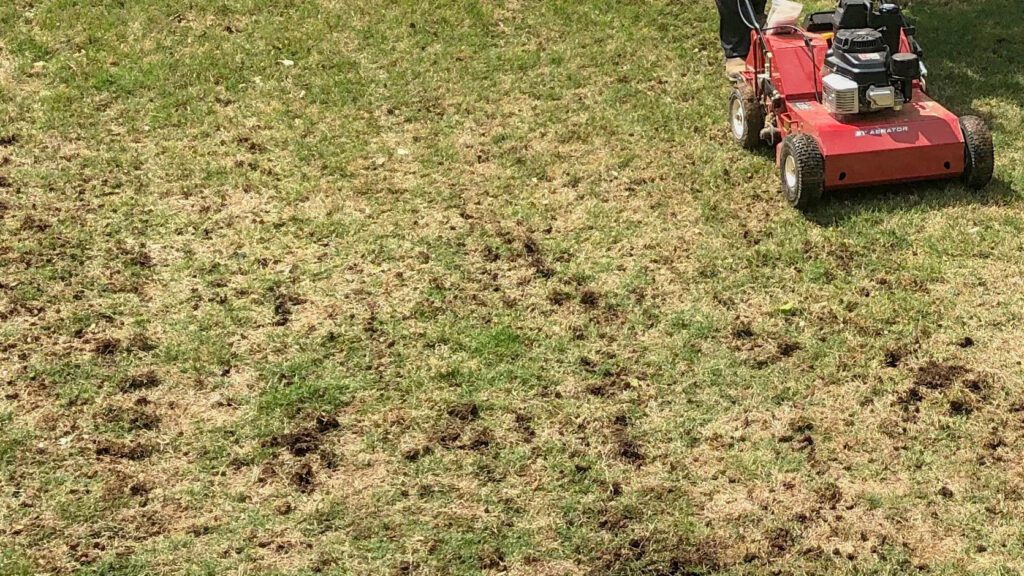
As the name suggests, the machine will roll over your lawn’s turf removing small quarter-sized cores of grass, soil, and root. The end picture is alarming and can leave you thinking about what have I just done! There is no need to worry; these plugs of soil can either be raked up or left to quickly break up and dissolve back to the soil below.

The holes left in your turf breathe new life into the surrounding roots. Growing roots now have direct access to oxygen, water, and fertilizer.

Why Should I Aerate My Lawn?

Maybe the most important thing to do this season is aerate. One thing these heavy rains do is cause our red clay to stick together. This eliminates pore space and leaves no room for roots and oxygen in the soil profile. Aeration this season will be essential in allowing the soil structure to get back into balance.

Rebecca Wood

Waynes has been serving customers since 1973. We have grown over the decades through a commitment to providing a world-class experience for our customers. We believe that if our employees are happy and fulfilled, they will go above and beyond in delighting our customers.

Latest from Waynes Blog

Opossum

Opossums in Florida: Habits, Risks, and ID

An opossum in Florida is usually a Virginia opossum, the state’s only marsupial. These animals are common around wooded areas, water sources, neighborhoods, gardens, sheds, crawl spaces, and yards where food or shelter is easy to find.  Opossums are mostly nocturnal and often avoid people, but they can become a nuisance when they get into…

Learn More >

tick

Ticks in Florida: Types, Season, and Prevention

In Florida, homeowners often encounter ticks around yards, trails, pets, and wooded perimeters. These animals thrive in shaded, grassy, brushy, or wooded outdoor environments, particularly where moisture, leaf litter, pets, and wildlife create ideal conditions.  Because certain ticks can transmit diseases, effective prevention is vital. Frequent sightings of ticks on clothing, pets, or outdoor recreation…

Learn More >

black carpenter ants

Carpenter Ants in Florida: Signs and Seasonal Activity

In Florida, carpenter ants are large insects that can be found both indoors and outdoors, particularly near moisture sources, trees, decaying wood, window frames, crawl spaces, attics, and plumbing leaks.  Unlike termites, they do not consume wood; instead, they often establish nests inside structural voids, soft or decayed wood, and pre-existing cavities. Spotting an occasional…

Learn More >

Florida no-see-um (biting midge) resting on human skin

Florida No-See-Ums: Identification, Bites, and Season

Biting midges, sand gnats, or sand flies, commonly known as Florida no-see-ums, are minuscule biting flies that often cause discomfort in coastal yards, patios, beaches, and marsh edges. Because of their tiny size, you might experience their small, itchy bites without ever spotting the insect itself.  These animals are particularly troublesome across coastal Florida, thriving…

Learn More >

Numerous reddish Florida fire ants swarming across a dirt mound with grass at the edges

Florida Fire Ants: Identification, Bites, and Mounds

Florida fire ants are one of the most frustrating ant problems homeowners face because they can build mounds in lawns, sting when disturbed, and return after rain or yard work.  The red imported fire ant is the species most people mean when they talk about fire ants in Florida. These ants are reddish brown to…

Learn More >

Florida millipede crawling across wet brick tile, segmented dark body with many pale legs visible

Florida Millipedes: Identification and Seasonal Habits

A Florida millipede is usually a nuisance pest, not a sign of structural damage. Millipedes live outdoors in damp places where they feed on decaying plant material, mulch, leaf litter, and rotting vegetation.  They often become noticeable after rain, heavy irrigation, or sudden moisture changes because saturated soil can push them toward patios, garages, crawl…

Learn More >

Aedes Mosquitoes

Florida Mosquitoes: Species, Season, and Bites

Florida mosquitoes are more than a backyard annoyance. They can make patios, pools, porches, and coastal yards difficult to enjoy, and some species can spread disease.  Florida has many mosquito species, but homeowners usually need to focus on a few practical questions: where they are breeding, when they are most active, and why they keep…

Learn More >

Translucent mole crab (sand flea) resting on coarse mixed-color beach sand

Sand Fleas in Florida: ID, Bites, and Season

Sand fleas in Florida can mean two different things, and that is where most of the confusion starts. At the beach, “sand fleas” often refers to mole crabs, small crustaceans that live in the surf zone and are not household fleas.  When people talk about itchy bites near beaches, marshes, patios, or coastal yards, they…

Learn More >

Ants crawling along a dirty white window sill and frame

Common Florida Insects: How to Identify Them

A Florida insect problem can look different from house to house. One home may deal with ants in the kitchen, another may see roaches in the garage, and another may notice termites, mosquitoes, fleas, or bed bugs.  Florida’s warm, humid climate can keep many pests active for long stretches of the year, so identification matters….

Learn More >

Scroll to Top